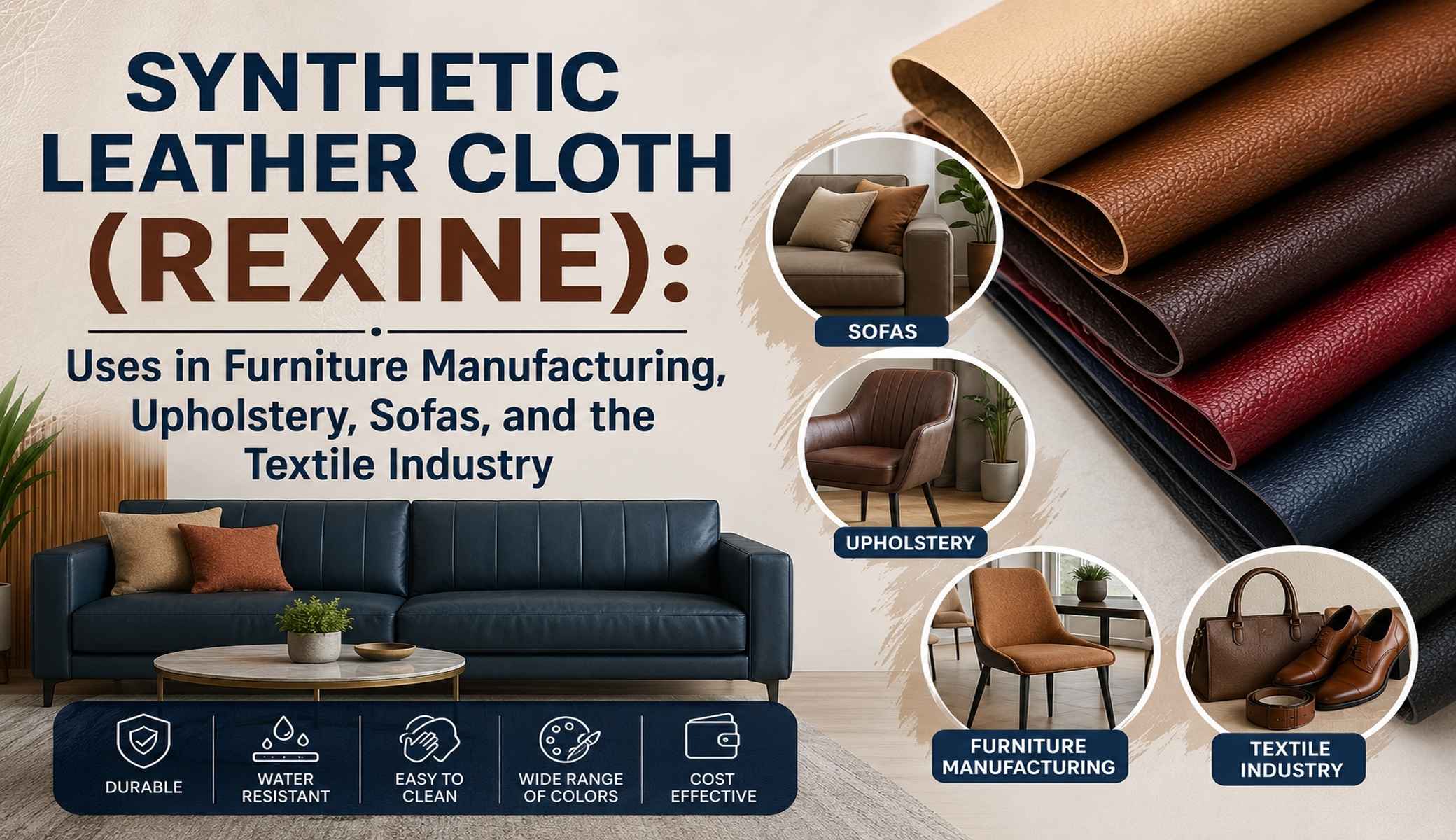
Synthetic Leather Cloth (Rexine): Uses in Furniture Manufacturing, Upholstery, Sofas, and the Textile Industry
Home |
Blogs |
Synthetic Leather Cloth (Rexine): Uses in Furniture Manufacturing, Upholstery, Sofas, and the Textile Industrys
08
JUN
📅 08 06 2026
Synthetic Leather Cloth (Rexine): Uses in Furniture Manufacturing, Upholstery, Sofas, and the Textile Industry
Synthetic leather cloth, commonly known as Rexine, has become one of the most widely used materials across the furniture, upholstery, automotive, and textile industries. Known for its durability, affordability, attractive appearance, and versatility, Rexine serves as an excellent alternative to genuine leather. Modern manufacturers prefer synthetic leather because it offers a premium look while being cost-effective and easy to maintain.
With advancements in material technology, synthetic leather is now available in a wide range of textures, colors, patterns, and finishes that closely resemble natural leather. From luxury sofas and office furniture to automotive seating and fashion accessories, Rexine has transformed the way manufacturers create stylish and durable products.
In this comprehensive guide, we'll explore the benefits, applications, manufacturing advantages, sustainability aspects, and growing importance of synthetic leather cloth in furniture making, upholstery, sofa manufacturing, and the textile industry.
What is Synthetic Leather Cloth (Rexine)?
Synthetic leather, often referred to as Rexine, is a man-made material designed to imitate the appearance and feel of genuine leather. It is typically manufactured by coating a fabric base with materials such as PVC (Polyvinyl Chloride) or PU (Polyurethane).
The resulting material offers a leather-like finish while providing enhanced durability, flexibility, and resistance to moisture and wear.
Key Characteristics of Rexine
- Leather-like appearance
- Available in various colors and textures
- Water-resistant surface
- Easy to clean and maintain
- Durable and long-lasting
- Cost-effective alternative to genuine leather
These characteristics make synthetic leather one of the most preferred materials in modern manufacturing industries.
Why Synthetic Leather is Popular in Furniture Manufacturing
Furniture manufacturers constantly seek materials that balance aesthetics, durability, and affordability. Synthetic leather fulfills all these requirements, making it a preferred choice for furniture production.
Premium Appearance
Modern Rexine products closely resemble genuine leather, providing furniture with an elegant and luxurious look.
Visual Benefits
- Smooth finish
- Rich texture options
- Premium appearance
- Available in multiple colors
- Suitable for modern and classic interiors
Consumers often find it difficult to distinguish high-quality synthetic leather from natural leather.
Cost-Effective Manufacturing Material
One of the biggest advantages of Rexine is its affordability.
Economic Benefits
- Lower production costs
- Reduced material wastage
- Affordable for large-scale projects
- Better profit margins for manufacturers
This allows furniture manufacturers to offer stylish products at competitive prices.
High Durability
Furniture experiences daily wear and tear. Rexine is designed to withstand frequent use while maintaining its appearance.
Durability Features
- Abrasion resistance
- Scratch resistance
- Tear resistance
- Long service life
- Moisture protection
Its durability makes it ideal for both residential and commercial furniture applications.
Applications of Rexine in Furniture Making
Synthetic leather is widely used across various furniture categories.
Residential Furniture
Home furniture manufacturers extensively use Rexine to create elegant and durable products.
Common Applications
- Living room sofas
- Recliner chairs
- Dining chairs
- Bed headboards
- Ottomans
- Lounge furniture
Rexine enhances the aesthetic appeal of furniture while ensuring easy maintenance.
Office Furniture
Modern offices require furniture that looks professional and withstands continuous use.
Office Furniture Applications
- Executive chairs
- Visitor chairs
- Conference seating
- Reception furniture
- Workstation seating
Synthetic leather offers a sophisticated appearance suitable for professional environments.
Hospitality Furniture
Hotels, restaurants, and cafés frequently use Rexine-covered furniture.
Hospitality Uses
- Restaurant seating
- Hotel room furniture
- Lobby sofas
- Banquet seating
- Lounge chairs
Its stain resistance and durability make it ideal for hospitality environments.
Importance of Rexine in Upholstery Industry
Upholstery involves covering furniture frames with padding, fabric, or leather-like materials to improve comfort and appearance.
Synthetic leather has become one of the most popular upholstery materials due to its flexibility and design versatility.
Superior Design Options
Manufacturers can create numerous textures and patterns using synthetic leather.
Popular Finishes
- Leather grain texture
- Matte finish
- Glossy finish
- Embossed patterns
- Designer prints
These options help interior designers achieve unique furniture aesthetics.
Easy Maintenance
Unlike natural leather, Rexine requires minimal upkeep.
Maintenance Advantages
- Easy cleaning with a damp cloth
- Resistant to spills and stains
- No polishing required
- Low maintenance costs
This convenience appeals to homeowners and commercial establishments alike.
Comfortable Seating Experience
Modern synthetic leather materials offer softness and flexibility that enhance seating comfort.
Comfort Features
- Smooth surface
- Flexible material structure
- Comfortable cushioning compatibility
- Suitable for long-term usage
These characteristics improve overall user satisfaction.
Role of Rexine in Sofa Manufacturing
The sofa industry is one of the largest consumers of synthetic leather.
Stylish Sofa Designs
Rexine enables manufacturers to create contemporary and luxury sofa designs at affordable prices.
Popular Sofa Types
- Sectional sofas
- Recliner sofas
- Corner sofas
- Modular sofas
- Office lounge sofas
Its versatility allows manufacturers to meet diverse consumer preferences.
Enhanced Durability for Daily Use
Sofas experience constant usage in homes, offices, hotels, and commercial spaces.
Benefits for Sofa Manufacturers
- Long-lasting upholstery
- Resistance to daily wear
- Easy repair and replacement
- Consistent product quality
This helps manufacturers maintain customer satisfaction and product reliability.
Wide Range of Color Options
Synthetic leather is available in countless shades and finishes.
Popular Colors
- Black
- Brown
- Beige
- Grey
- White
- Custom designer colors
This variety allows manufacturers to align furniture with modern interior design trends.
Applications of Synthetic Leather in Textile Industry
The textile industry extensively uses synthetic leather for various products beyond furniture.
Fashion Accessories
Rexine is widely used to manufacture stylish fashion items.
Common Products
- Handbags
- Wallets
- Belts
- Footwear
- Travel bags
Its affordability and design flexibility make it highly popular in fashion manufacturing.
Automotive Textiles
Vehicle manufacturers use synthetic leather for interior applications.
Automotive Uses
- Car seat covers
- Door panels
- Steering wheel covers
- Armrests
- Interior trims
Rexine enhances vehicle aesthetics while offering excellent durability.
Industrial Applications
Many industries use synthetic leather for protective and decorative purposes.
Industrial Products
- Protective covers
- Equipment upholstery
- Storage solutions
- Commercial seating
Its resilience and versatility support various industrial requirements.
Sustainability Advantages of Synthetic Leather
Sustainability has become a major factor influencing material selection across industries.
Reduced Dependence on Animal Leather
Synthetic leather provides an alternative to genuine leather, helping reduce reliance on animal-derived materials.
Long Product Lifespan
Durable synthetic leather products remain usable for years, reducing replacement frequency.
Lower Resource Consumption
Modern manufacturing processes require fewer resources compared to traditional leather processing.
Recyclable Material Options
Many manufacturers now produce eco-friendly and recyclable synthetic leather products.
Reduced Maintenance Requirements
The low-maintenance nature of Rexine reduces the need for chemical cleaners and maintenance products.
As sustainability awareness grows, synthetic leather continues to evolve as a more environmentally responsible option.
Advantages of Choosing Rexine Over Genuine Leather
Many consumers and manufacturers prefer synthetic leather because of its practical advantages.
Key Benefits
- Affordable pricing
- Consistent quality
- Easy maintenance
- Moisture resistance
- Wide design variety
- Animal-friendly alternative
- Lightweight material
- Excellent durability
These benefits make Rexine suitable for both residential and commercial applications.
Future Trends in Synthetic Leather Industry
The synthetic leather market continues to expand due to growing demand from furniture, automotive, and fashion sectors.
Emerging Trends
Eco-Friendly Materials
Manufacturers are developing sustainable synthetic leather solutions using recycled and bio-based materials.
Advanced Textures
New production technologies create highly realistic leather-like surfaces.
Smart Manufacturing
Automation improves product consistency and quality.
Custom Design Solutions
Consumers increasingly demand personalized colors, textures, and finishes.
These innovations are expected to drive further growth in the synthetic leather industry.
Conclusion
Synthetic leather cloth, commonly known as Rexine, has become an essential material in furniture manufacturing, upholstery, sofa production, automotive interiors, and the textile industry. Its combination of affordability, durability, versatility, and attractive appearance makes it an excellent alternative to genuine leather.
From luxurious sofas and office chairs to handbags and automotive seating, Rexine continues to offer manufacturers and consumers a practical solution that balances performance and aesthetics. As sustainability and innovation continue to shape modern industries, synthetic leather is expected to remain one of the most sought-after materials for a wide range of applications.
Frequently Asked Questions (FAQs)
1. What is synthetic leather cloth or Rexine?
Synthetic leather cloth, commonly called Rexine, is a man-made material designed to resemble genuine leather and is usually made using PVC or PU coatings on a fabric base.
2. Is Rexine suitable for sofa manufacturing?
Yes, Rexine is widely used in sofa manufacturing because it is durable, affordable, attractive, and easy to maintain.
3. What are the advantages of synthetic leather over genuine leather?
Synthetic leather is more affordable, easier to maintain, moisture-resistant, available in various designs, and does not involve animal leather.
4. Can Rexine be used for office furniture?
Yes, Rexine is commonly used for office chairs, conference seating, executive furniture, and reception sofas.
5. Is synthetic leather waterproof?
Most PVC-based Rexine materials offer good water resistance, making them suitable for furniture and upholstery applications.
6. How long does Rexine furniture last?
High-quality Rexine furniture can last for many years with proper care and regular cleaning.
7. What industries use synthetic leather?
Furniture manufacturing, upholstery, automotive, fashion accessories, hospitality, and textile industries extensively use synthetic leather.
8. Is Rexine easy to clean?
Yes, Rexine can typically be cleaned using a soft cloth and mild cleaning solution.
9. Is synthetic leather environmentally friendly?
Modern synthetic leather options increasingly use recyclable and eco-friendly materials, contributing to sustainability goals.
10. Why is Rexine popular in upholstery?
Its durability, design flexibility, affordability, easy maintenance, and premium appearance make it one of the most popular upholstery materials.