How Do I Choose the Right Thickness of Laminate Sheet for Modern Kitchens, Wardrobes, Wall Panels, and Furniture?
Home |
Blogs |
How Do I Choose the Right Thickness of Laminate Sheet for Modern Kitchens, Wardrobes, Wall Panels, and Furniture?s
12
JUN
📅 12 06 2026
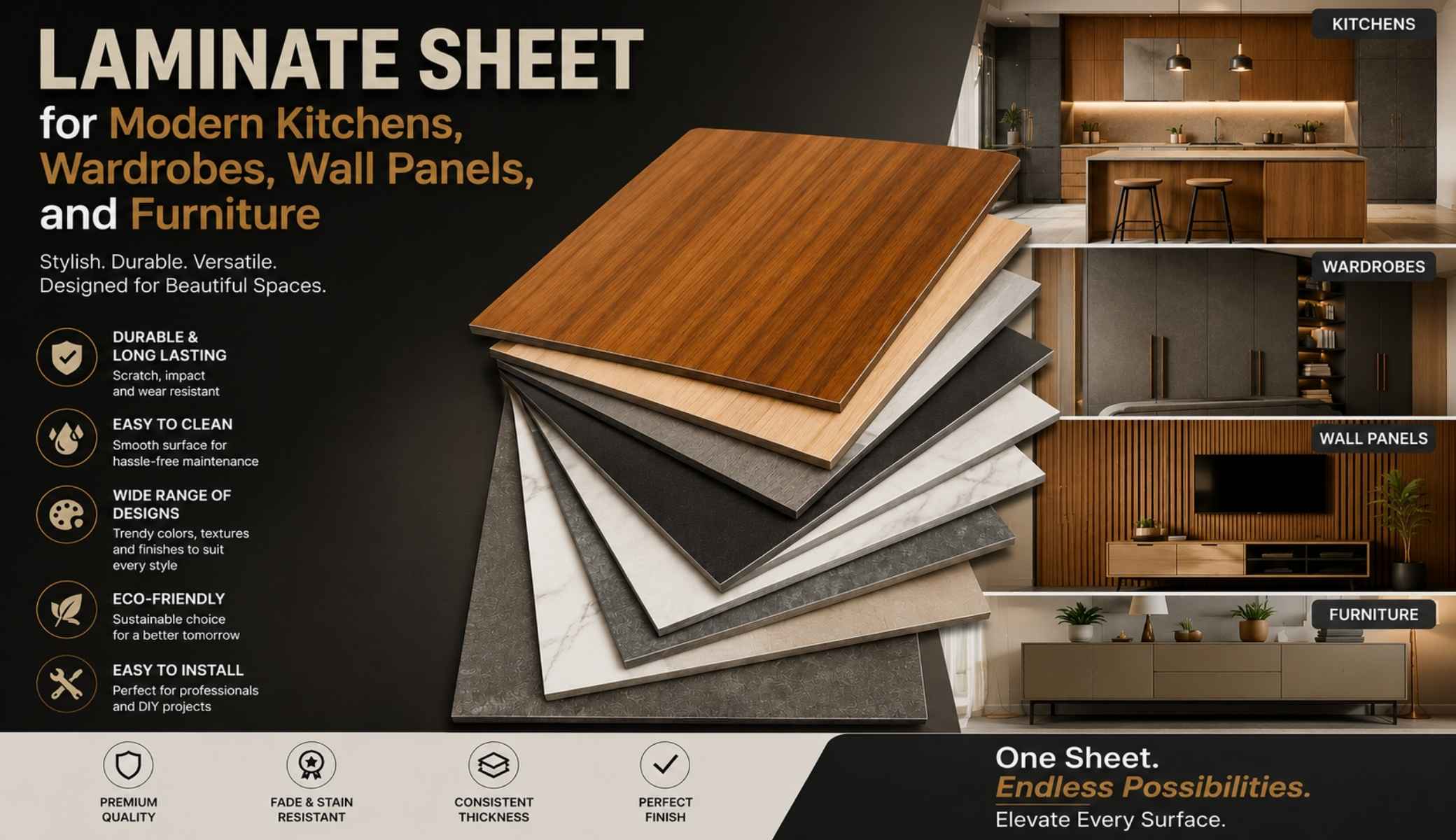
How Do I Choose the Right Thickness of Laminate Sheet for Modern Kitchens, Wardrobes, Wall Panels, and Furniture?
Laminate sheets have become one of the most popular surfacing materials in modern interior design. They are widely used in kitchens, wardrobes, furniture, wall panels, office interiors, and commercial spaces due to their durability, affordability, and attractive appearance. However, one of the most common questions homeowners, architects, interior designers, and furniture manufacturers ask is: "What is the right laminate sheet thickness for my application?"
Choosing the correct laminate thickness is crucial because it directly impacts durability, aesthetics, performance, and cost. A laminate that is too thin may not provide sufficient protection, while unnecessarily thick laminates can increase project expenses without offering significant benefits.
In this comprehensive guide, we will explore laminate sheet thicknesses, their applications, advantages, and how to select the best option for kitchens, wardrobes, wall panels, and furniture.
Understanding Laminate Sheet Thickness
Laminate sheets are manufactured by compressing multiple layers of kraft paper and decorative paper under high pressure and temperature. These sheets are then bonded to substrates such as plywood, MDF, HDF, particle board, or block board.
Laminate thickness is typically measured in millimeters (mm), and common thicknesses include:
- 0.6 mm
- 0.7 mm
- 0.8 mm
- 1.0 mm
- 1.25 mm
- 1.5 mm
Each thickness serves a specific purpose depending on the application and expected usage.
Why Laminate Thickness Matters
Many people focus only on color, texture, and finish while selecting laminates. However, thickness plays an equally important role.
Key Benefits of Choosing the Right Thickness
Improved Durability
Thicker laminates generally offer better resistance to scratches, impacts, and daily wear.
Better Surface Protection
The right thickness protects furniture and panels from moisture, stains, and damage.
Enhanced Appearance
Proper laminate thickness ensures a smooth finish and premium look.
Longer Lifespan
Correctly selected laminates tend to perform better over time and require fewer repairs or replacements.
Cost Optimization
Selecting the appropriate thickness helps avoid overspending while ensuring adequate performance.
Choosing Laminate Thickness for Modern Kitchens
The kitchen is one of the most frequently used spaces in a home. Cabinets, shutters, drawers, and countertops experience constant exposure to moisture, heat, grease, and regular handling.
Recommended Thickness for Kitchen Cabinets
0.8 mm to 1.0 mm Laminate
This thickness range is considered ideal for most modular kitchen shutters and cabinets.
Benefits
- Good scratch resistance
- Better durability
- Moisture resistance
- Premium appearance
- Easy maintenance
For high-end modular kitchens, many designers recommend 1.0 mm laminates because they provide superior performance and longevity.
Kitchen Interior Surfaces
The interior side of cabinets generally does not require heavy-duty protection.
Recommended Thickness
This provides adequate protection while keeping costs under control.
Kitchen Counter Areas
For surfaces exposed to heavy usage, thicker laminates are preferred.
Recommended Thickness
These laminates offer enhanced durability and resistance against daily wear and tear.
Choosing Laminate Thickness for Wardrobes
Wardrobes are among the most visible furniture elements in bedrooms. They require laminates that balance aesthetics, durability, and affordability.
Wardrobe Exterior Shutters
The external surfaces are exposed to frequent opening, closing, cleaning, and occasional impacts.
Recommended Thickness
Advantages
- Better durability
- Elegant appearance
- Scratch resistance
- Easy cleaning
These laminates provide a premium look while ensuring long-term performance.
Wardrobe Interior Panels
The inside surfaces face minimal wear compared to exterior shutters.
Recommended Thickness
This thickness offers a cost-effective solution without compromising functionality.
Choosing Laminate Thickness for Wall Panels
Decorative wall panels are increasingly popular in homes, offices, hotels, and commercial spaces.
Wall panels are generally not subjected to heavy wear, allowing thinner laminates to perform effectively.
Decorative Wall Cladding
Recommended Thickness
Benefits
- Lightweight installation
- Attractive finishes
- Cost-effective design
- Wide variety of textures
This thickness range is ideal for feature walls, reception areas, living rooms, and commercial interiors.
High-Traffic Commercial Wall Panels
In areas where walls may experience frequent contact, a slightly thicker laminate is advisable.
Recommended Thickness
These laminates provide additional protection while maintaining aesthetics.
Choosing Laminate Thickness for Furniture
Furniture surfaces encounter varying levels of usage depending on their purpose.
Selecting the right laminate thickness ensures durability and visual appeal.
Office Furniture
Office desks, conference tables, workstations, and storage units require durable surfaces.
Recommended Thickness
Benefits
- Impact resistance
- Professional appearance
- Long-lasting performance
- Easy maintenance
Residential Furniture
Furniture such as TV units, study tables, bookshelves, and side tables generally perform well with:
Recommended Thickness
This thickness balances affordability and durability.
Premium Furniture
Luxury furniture often demands superior quality and aesthetics.
Recommended Thickness
These laminates provide enhanced durability and a premium finish.
Comparison of Laminate Thicknesses
Thickness Best Applications
0.6 mm Interior wardrobe panels, wall panels, low-use furniture
0.7 mm Decorative applications and residential furniture
0.8 mm Wardrobes, furniture, office interiors
1.0 mm Modular kitchens, premium wardrobes, commercial furniture
1.25 mm High-end furniture and heavy-duty surfaces
1.5 mm Countertops and specialized commercial applications
Factors to Consider When Selecting Laminate Thickness
Usage Frequency
Higher usage areas require thicker laminates.
Examples:
- Kitchens → 1.0 mm
- Office desks → 0.8–1.0 mm
- Decorative walls → 0.6 mm
Substrate Quality
The base material also affects laminate performance.
Common substrates include:
- Plywood
- MDF
- HDF
- Particle board
- Block board
A high-quality substrate combined with the correct laminate thickness delivers optimal results.
Benefits of Using Quality Laminates
High-quality laminates offer several advantages:
- Scratch resistance
- Heat resistance
- Moisture resistance
- Stain resistance
- Easy maintenance
- Attractive appearance
- Long service life
- Cost-effectiveness
These benefits make laminates one of the most preferred surfacing solutions for modern interiors.
Conclusion
Selecting the right laminate sheet thickness is essential for achieving the perfect balance between durability, aesthetics, functionality, and cost. While thinner laminates are suitable for decorative applications and low-use surfaces, thicker laminates are ideal for kitchens, wardrobes, office furniture, and high-traffic areas.
As a general guideline:
- 0.6 mm – Wall panels and interior surfaces
- 0.8 mm – Furniture and wardrobes
- 1.0 mm – Modular kitchens and premium furniture
- 1.25 mm to 1.5 mm – Heavy-duty and luxury applications
By understanding the purpose of each thickness and matching it with your project requirements, you can create beautiful, durable, and long-lasting interiors that deliver excellent value for years to come.
Frequently Asked Questions (FAQs)
1. Which laminate thickness is best for kitchen cabinets?
A thickness of 0.8 mm to 1.0 mm is generally recommended for kitchen cabinet shutters and modular kitchens.
2. Is 1 mm laminate better than 0.8 mm laminate?
Yes, 1 mm laminates offer better durability, impact resistance, and longevity, making them ideal for high-use areas.
3. What laminate thickness is suitable for wardrobes?
For wardrobe shutters, 0.8 mm to 1.0 mm laminates are recommended, while 0.6 mm laminates are suitable for interior panels.
4. Which laminate thickness is best for wall panels?
Decorative wall panels typically use 0.6 mm to 0.8 mm laminates.
5. Can 0.6 mm laminate be used in kitchens?
It can be used for cabinet interiors but is generally not recommended for exterior shutters exposed to frequent use.
6. Does laminate thickness affect durability?
Yes. Thicker laminates generally provide better resistance to scratches, impacts, and daily wear.
7. Which laminate is best for office furniture?
Office furniture typically performs best with 0.8 mm to 1.0 mm laminates.
8. Are thicker laminates more expensive?
Yes, thicker laminates generally cost more because they use additional material and offer enhanced performance.
9. What is the most commonly used laminate thickness?
0.8 mm and 1.0 mm are the most commonly used laminate thicknesses for residential and commercial interiors.
10. How do I choose the right laminate for my project?
Consider the application, usage frequency, moisture exposure, budget, aesthetics, and substrate quality before selecting laminate thickness.